The trend, not the daily number
A single morning's weight rarely tells the whole story. You might be up two pounds one day and down one the next, usually from shifts in hydration, meals, or timing rather than any real change in body fat.1
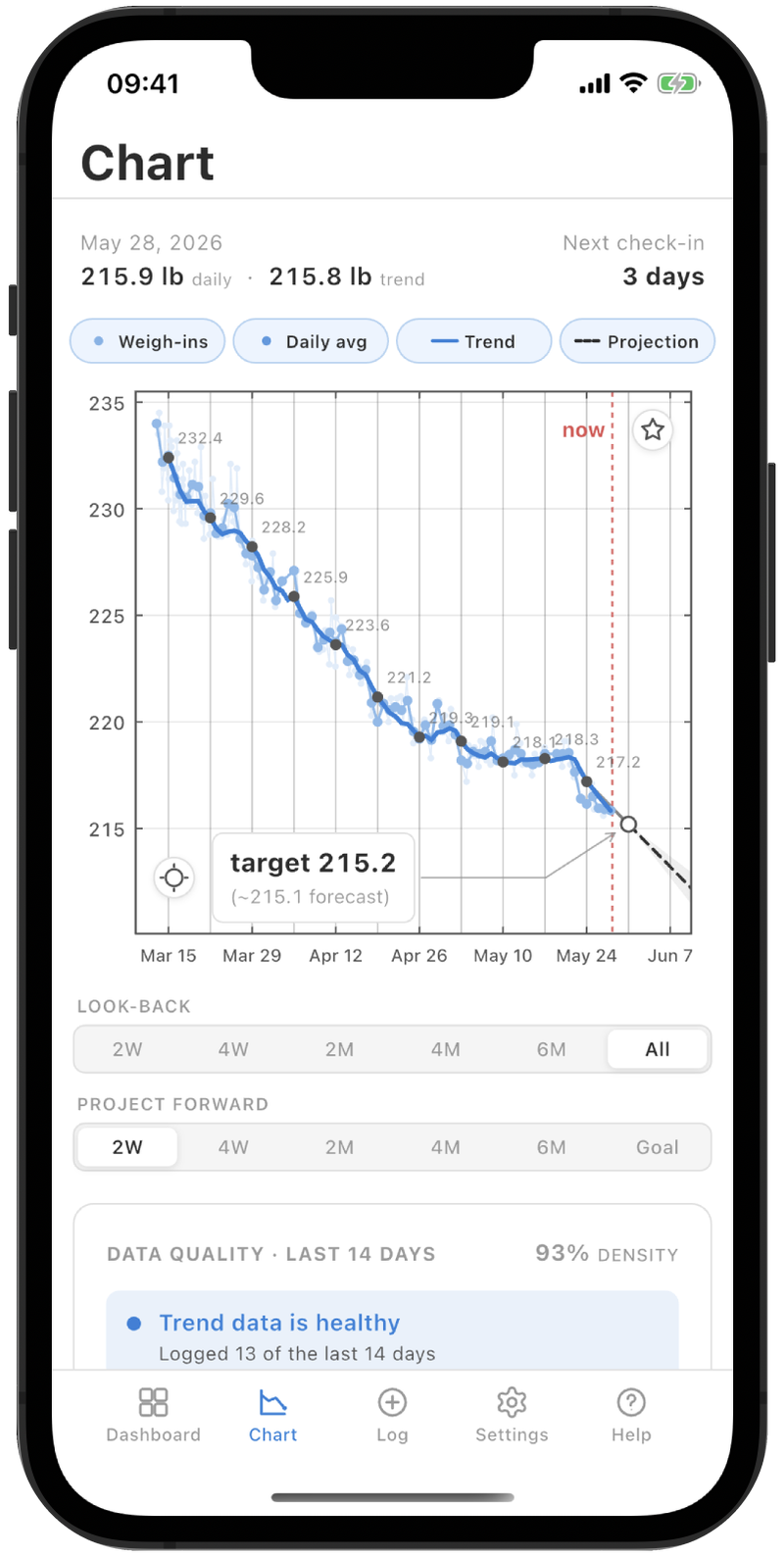
That's why Steady Scale works from the trend rather than any single reading. It fits a smooth trend through your daily averages and keeps your individual weigh-ins visible beneath it, so you can always see how the trend relates to your data.
Weigh in as often as you like
Step on the scale once a day or several times. Every reading contributes to that day's average.
Taking more readings doesn't make the trend noisier. It simply gives a better estimate of your weight that day, making the daily average a more representative estimate than any single reading.
There's a second benefit: research has consistently linked more frequent self-weighing with better weight management outcomes, both during weight loss and afterward.2
Your weekly target
Each week, the app sets a weight goal based on your plan. From your target pace, it works out where your trend should be by your next check-in, then tells you whether you're ahead of it, on track, or behind.
Because it's measured against your trend rather than any single day's reading, day-to-day fluctuations are less likely to make a good week look like a bad one.
Forecasts and your goal
Your goal date is projected from your plan, using the weight at your most recent check-in and the pace you set. That gives you a line to your goal you can actually see, making it easy to visualize when you're expected to reach your goal.
Because weight change is never perfectly linear, that date is less certain the further ahead it looks. The app shows this honestly, drawing the projection as a range that widens over time rather than a single hard line.
Loss, gain, or maintenance
Steady Scale was designed from the beginning to support weight loss, weight gain, and maintenance. The same trend model underpins all three, so the app adapts to your goal without changing how your progress is measured.
For maintenance, Monitor mode lets you keep an eye on your weight against a reference point, without weekly targets or forecasts. Among people who successfully keep weight off, consistent self-weighing is one of the habits most often associated with long-term maintenance.3
Sometimes the goal isn't to change your weight at all. It's simply to notice when it's beginning to change.
What we deliberately left out
Steady Scale has no streaks, badges, reminders, or motivational nudges.
It isn't built to maximize engagement. It's built to help you understand your weight whenever you choose to use it.
Like the scale itself, it's meant to be a quiet, reliable instrument: there when you need it, and out of the way when you don't.
Your data
Your data stays on your device, with optional backup to your own iCloud.
No accounts, no servers, no ads, no tracking. Your data belongs to you, and you can export it whenever you like.